
Is there economic rationale to move to renewable heat solutions from traditional fossil-fuel based heat? Heat market is a peculiar one. It is large. Average household in the UK, for example, consumes 4x more gas (to generate heat) than electricity (measured in comparable units). Heat is local (cannot be transported far from the origin). Heat is often unwanted being a byproduct of some other activity (fossil fuel combustion to generate electricity). This note is an attempt to quantify the costs of renewable heat, and is a finalization of discussion started here.
Incumbent and contenders
Meet the incumbent. Traditional way to generate heat in many places in the world is to burn gas in an in-house gas boiler. Modern gas boilers take 100 units of energy (gas) and convert them into 90+ units of heat.
Here is your traditional gas boiler:

Here is contender #1. Micro-CHP (Combined Heat and Power) boiler, that takes 100 units of gas and converts it into say 80 units of heat, and 10 units of (byproduct) electricity. The technology is still not green, but economics may be very compelling (byproduct electricity is currently priced 3-4x the cost of gas feedstock).
See any difference? No. This is a drop-in replacement of your current boiler:
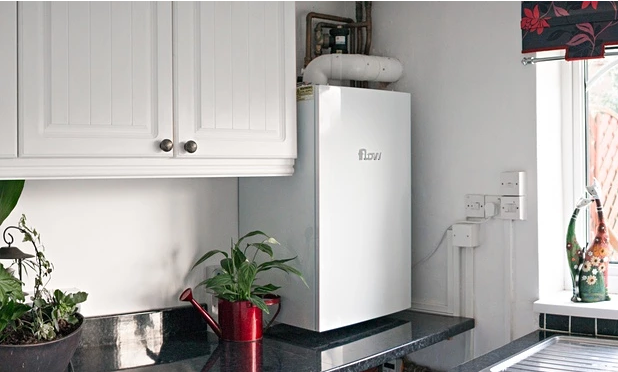
Source: Guardian
Contender #2. Electric heating (radiators). It takes 100 units of electricity and converts it into 100 units of heat. Green, as long electricity “feedstock” is green.
One advantage of this technology is mobility. Flexibility of electric wires is much higher than that of gas pumps:

Finally, contender#3. Heat pumps. Such devices consume electricity to transfer heat from place (outside your house) to another (inside). These are similar to conditioners working in heating mode, or refrigerators working in reverse (ordinary refrigerators remove heat from inside the fridge and put it at the outer back). The beauty of this technology is that to transfer 1 unit of heat it takes much less than 1 unit of electricity. The ratio of heat transferred to electricity consumed is called Coefficient of Performance (COP), and for modern heat pumps it is in the range of 2x-5x (depending on the outside temperature).
Heat pump looks like a conditioner on the wall (as effectively it is a conditioner):
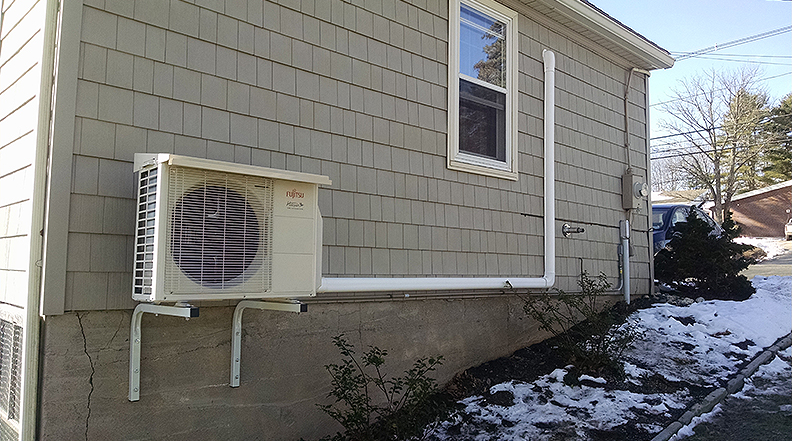
Implied cost of heat
Now comes the economic part. Once we know the energy conversion cycle (how much gas/electricity is converted into heat/byproduct electricity) we can calculate the implied (fuel) cost of heat.
| Energy conversion | Implied cost of heat (OpEx) | |
| Gas boiler (incumbent) | 100 (units of) gas => 90 heat | 100/90 * Pgas |
| Micro-CHP | 100 gas => 80 heat + 10 el-ty | (100*Pgas – 10*Pel-ty) / 80 |
| Electric heating | 100 el-ty => 100 heat | Pel-ty |
| Heat pumps | 100 el-ty => COP * 100 heat | Pel-ty / COP |
The question we want to answer is how these technologies’ implied cost of heat rank against each other depending on the conditions (Pel-ty/Pgas , COP)?
Heat map
Here is the result of cost comparison (see details of calculations in the Appendix below). Two dimensional space (Pelectricity/Pgas , COP) is split into areas with the same order of the implied heat cost:
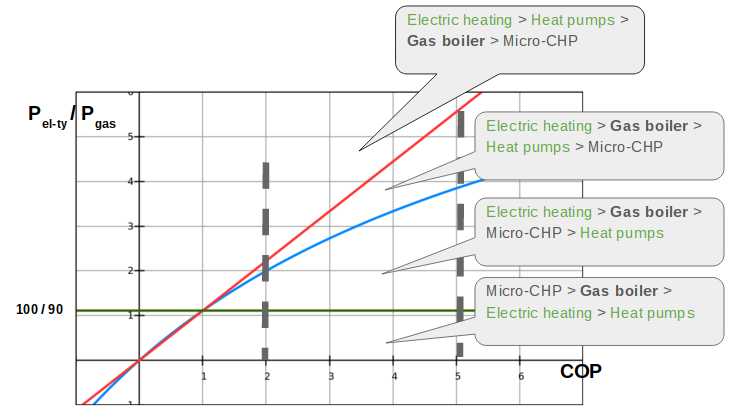
Source: GraphSketch
Dynamics
We live in the world where electricity price is set by fossil fuel (including gas) combustion. In this world Pelectricity/Pgas is 3x+ (combustion is inefficient process), and the cheapest heat solution in micro-CHP. Only in the places without extreme cold temperatures (where COP would significantly deteriorate) heat pumps would be preferred.

But combustion-based electricity is being successfully challenged by solar/wind. Electricity/gas price ratios that we are used to may soon become part of history. In the post-combustion world where Pelectricity/Pgas is between 1x and 3x it is the heat pumps that are the cheapest heat option. Only in the places with extreme cold temperatures mCHP would still be preferred.
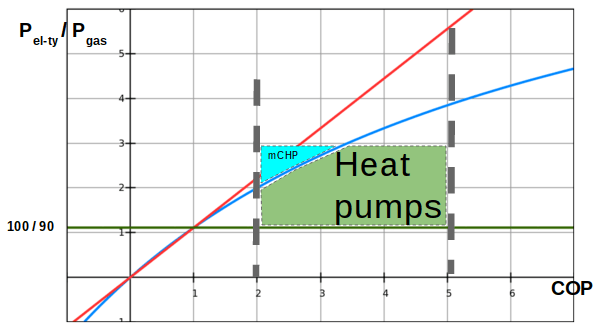
Is this world coming? Yes, but gas will fight for the market share (on electricity generation market) and so electricity/gas price ratio allowing for gas combustion, will not go immediately. This is the world we are entering: solar/wind set the electricity price, and gas price adjusts to make combustion still profitable.
Will gas ever be cheaper than electricity? This is not unthinkable. That would be the world where gas would be treated as a valuable chemical feedstock, and not priced for the energy stored in its chemical bonds. This world will be totally dominated by heat pumps (and mCHP in effect will be the most expensive option).

Thus, the dynamics we are likely to see in the coming years is from the gas boilers, to mCHP gas boilers, to heat pumps.
Appendix. Operating cost of heat: order calculation.
If Pel-ty/Pgas < 100/90 => Cost of heat order: Micro-CHP > Gas boiler > Electric heating
If Pel-ty/Pgas > 100/90 (combustion electricity world we live in) => Cost of heat order: Electric heating > Gas boiler > Micro-CHP
Heat pumps?
If Pel-ty/Pgas < 100/90 => Micro-CHP > Gas boiler > Electric heating > Heat pumps
If Pel-ty/Pgas > 100/90
- Heat pumps < > Gas boiler? 100/90*Pgas= Pel-ty/COP => Pel-ty/Pgas = 100/90*COP
- Heat pumps < > Micro-CHP? (100Pgas- 10Pel-ty)/80 = Pel-ty/COP => Pel-ty/Pgas = 100/80 / (1/COP+10/80)
For complete analysis, cost of hardware needs to be taken into account

 Energy, Tech, Macro
Reblogged this on Зеленое будущее.
LikeLike